

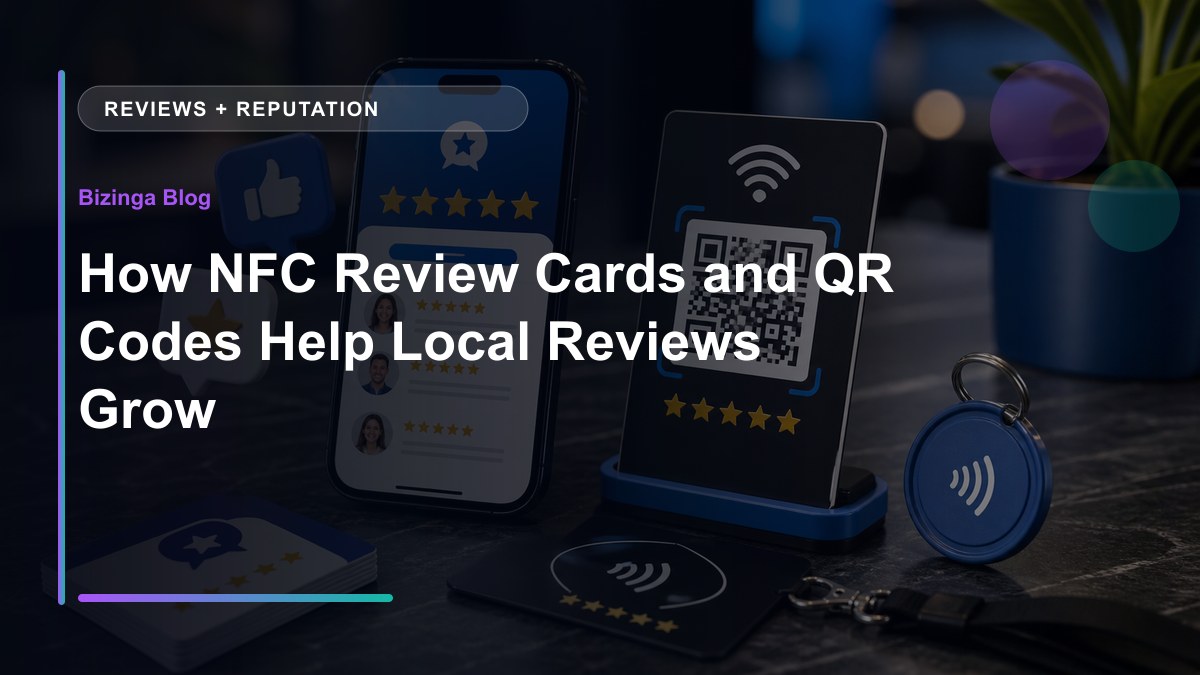
Practical guide
How NFC Review Cards and QR Codes Help Local Reviews Growis about making the next customer action easier. A automotive leader does not need another disconnected marketing idea. They need a clear path from search to trust, from trust to conversation, and from conversation to revenue.
This guide shows how to make it simple for customers to tap, scan and leave feedback while the experience is still fresh. You will see how the page, Google visibility, reviews, texting, follow up and measurement work together so the customer has fewer reasons to leave and more reasons to choose you.
Start with the customer journey
Before changing tools or rewriting pages, map the customer journey as it actually happens. A customer may find you through local search, read reviews, visit a website, scan something in person, text a question, call from a mobile phone or ask a team member for help. Each step should make the next action feel natural.
Many local businesses lose leads because the pieces are managed separately. The website says one thing, Google shows another, reviews live somewhere else and follow up depends on who remembers. Bizinga is built around connection, which is whyReview NFC products,review managementanddynamic QR codesshould work together instead of feeling like separate tools.
The fastest test is simple. Pull up your business on a phone and act like a new customer. Search, compare, click, read, ask a question and decide whether you would trust the company. Any slow or confusing step is a place to improve.
Make the page useful before it asks for action
A strong page answers the question the visitor already has in mind. It explains the problem, describes the best next step and shows enough proof to make action feel safe. That matters for readers, and it also helps search engines understand why the page deserves to be found.
Keep the main action clear. The page may include supporting links tocustomer engagement products, the rightAutomotivecategory page and related service pages, but the reader should never wonder what to do next. If the best action is to call, text, book, scan, request a quote or leave a review, make that action easy to see and easy to complete.
Internal links should sit inside useful explanations. A phrase likeReview NFC productsshould help the reader continue into a deeper resource. A link todynamic QR codesshould appear where the article explains the product use case. The link should feel helpful, not stuffed into the page.
Connect reviews, texting and follow up
Customers do not think in channels. They think in moments. They search, compare, ask, decide, buy and share feedback. Reviews, texting, forms, inbox management, QR codes and NFC tools are strongest when they support the same customer path.
If the topic is review focused, improve the ask first. Use the right timing, the right location link and a simple tap or scan path. If the topic is conversation focused, make sure the visitor can call or text without friction and that the team can respond from a shared workflow. If the topic is search focused, make sure the page, reviews, categories and Google Business Profile details support the same message.
The practical workflow is capture the customer action, route it to the right place, respond quickly, ask for the next step and measure the result. A simple workflow used every day will beat a complicated system nobody follows.
Use local SEO as the foundation
Local SEO is not only about rankings. It is about helping the right customer understand that your business is relevant, trusted and easy to contact. The page title, headings, review signals, service descriptions, schema, Google Business Profile details and calls to action should all support that outcome.
Start with accuracy. Make sure the business name, services, categories, hours, phone number and website links match everywhere a customer might see them. Then add depth. Explain who you help, what the customer should expect, what questions they ask and what step they should take next.
Bizinga supports local businesses across the United States, Canada, Australia, the United Kingdom, England and other markets. The principle stays the same everywhere: write for the local customer first, then connect that useful page to the tools that help the business respond.
A practical plan
- Choose one main action.Decide whether the reader should call, text, book, request a quote, scan, leave a review or complete a form.
- Match the page to intent.Open with the problem the customer is trying to solve, then explain the path forward in plain language.
- Add helpful internal links.Link the natural keyword phrase to the right product, service or category page.
- Assign the follow up.Decide who answers, who checks the inbox, who asks for the review and who follows up when the customer does not respond.
- Measure the actions.Track calls, text clicks, WhatsApp clicks, form submissions, review clicks, PDF downloads, pricing clicks and scroll depth.
Common mistakes that cost leads
The first mistake is asking for action before giving value. A page that jumps straight to a sales pitch can feel thin. Give the reader enough context to understand the problem, see the solution and feel confident about the next step.
The second mistake is hiding the most useful action. On mobile, a visitor should not have to hunt for the way to contact the business. Calls, texts, forms and review actions should be visible, fast and connected to a real response process.
The third mistake is treating SEO as separate from operations. A page can rank and still fail if nobody responds to the lead. A workflow can be powerful and still underperform if the page never earns trust. The best results come when visibility, proof and follow up are connected.
Turn the idea into a team habit
The best local growth systems are easy for the team to repeat. If the page promises a fast text reply, someone needs to own that inbox. If the business asks for reviews, staff need to know when to ask and which link or NFC tool to use. If the page offers a guide, quote or consultation, the next step should be clear before the lead arrives.
This is where Bizinga becomes practical. The goal is not to add more busy work. The goal is to connect the page, the inbox, the review path and the follow up so the team can serve customers faster. When the habit is clear, the marketing gets stronger because the customer experience gets stronger.
Real world example
A local business can have a strong service, happy customers and steady website traffic, yet still miss leads because the next step is unclear. When the page explains the service, links to the right category, makes texting easy and asks for reviews at the right time, the same traffic becomes more valuable.
That is the point of connecting in person review capture with NFC and QR codes with Bizinga tools. The customer gets a simpler path, and the team gets a process they can actually manage.
What to measure each month
Measure the actions that show customer intent. Calls, text clicks, WhatsApp clicks, contact form submissions, CTA widget clicks, PDF downloads, review clicks, pricing clicks and product page visits all tell a different part of the story. A page that gets traffic but no action needs a stronger offer or clearer next step.
Review internal link behavior too. If readers move from an article intoReview NFC products,dynamic QR codesorAutomotive, the content is doing more than attracting traffic. It is helping people choose a path and helping search engines understand how the site is organized.
Refresh the article when new customer questions appear. Add examples, improve the call to action, update outdated details and strengthen the sections that keep readers engaged. Good SEO is a steady improvement habit.
Frequently asked questions
How many internal links should a blog article include?Use enough links to help the reader move deeper, but keep them natural. A strong article can usually support links to one product page, one service page, one category page and one broader resource page without feeling forced.
Should every article have a call to action?Yes. The reader should know what to do next. The call to action can invite them to contact Bizinga, explore a related product, review an industry page or ask for help building the workflow.
Can one article support both SEO and ads?Yes, if it is useful. Paid traffic still needs a trustworthy page. Organic traffic still needs a clear next step. The best page explains the problem, shows the path, proves relevance and makes action easy.
What makes Bizinga different?Bizinga connects local SEO, Google Business Profile optimization, reviews, texting, inbox management, QR codes, NFC products, contact tools, automations and follow up into one clearer customer journey.
Ready to turn this into a working growth system?
Bizinga helps local businesses connect search, reviews, texting, QR codes, NFC products, forms and automations into a customer journey that is easier to use and easier to measure.


